
 Pin It
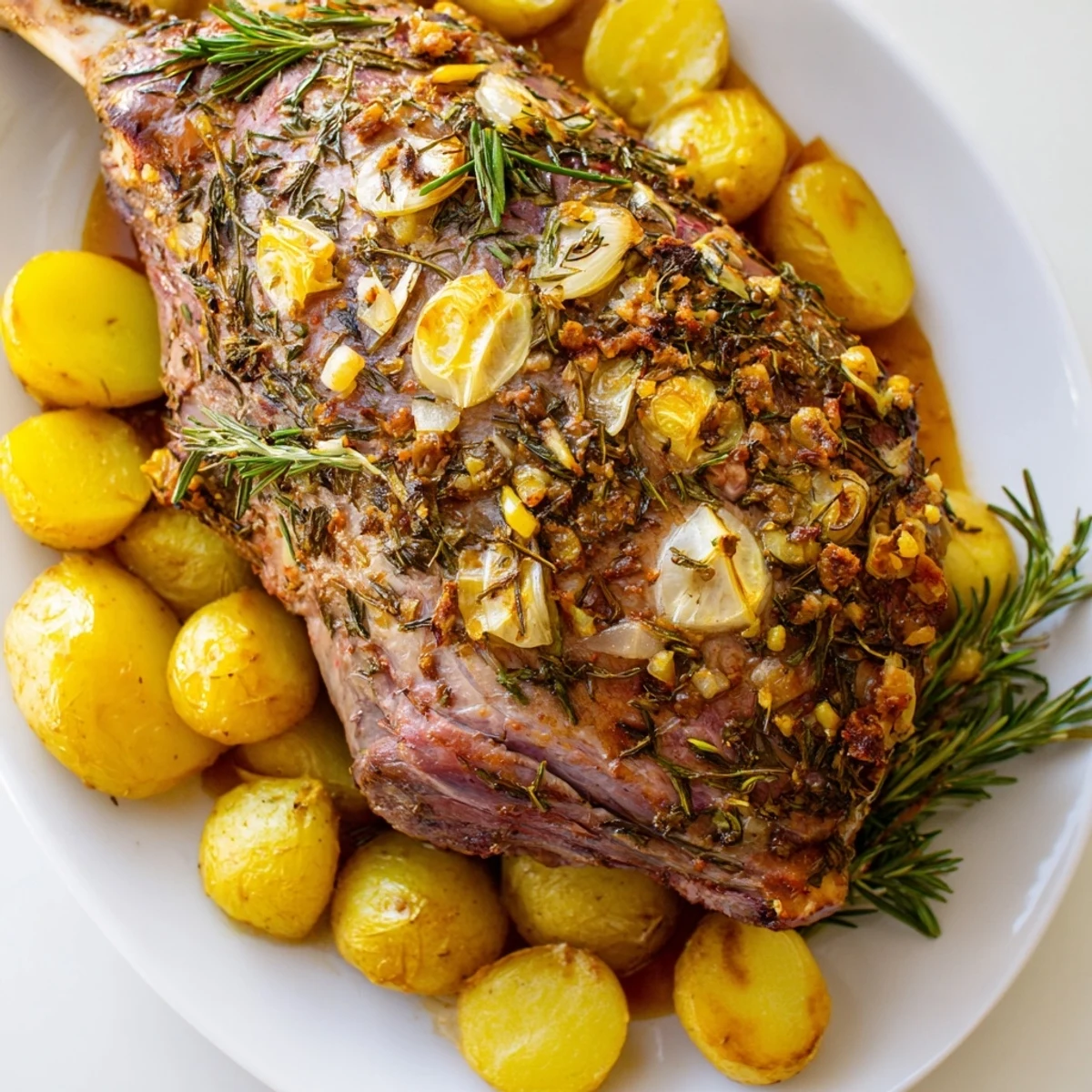
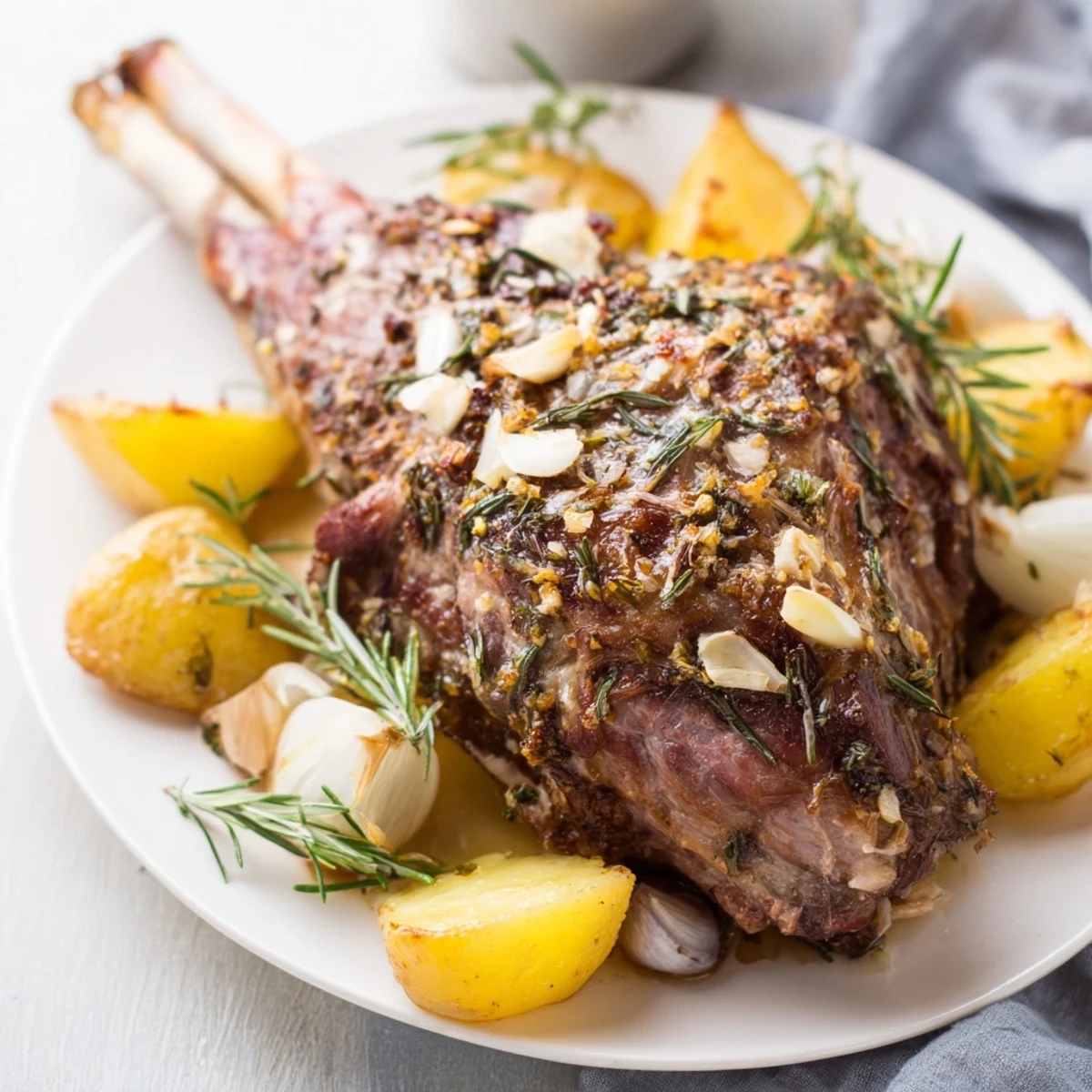
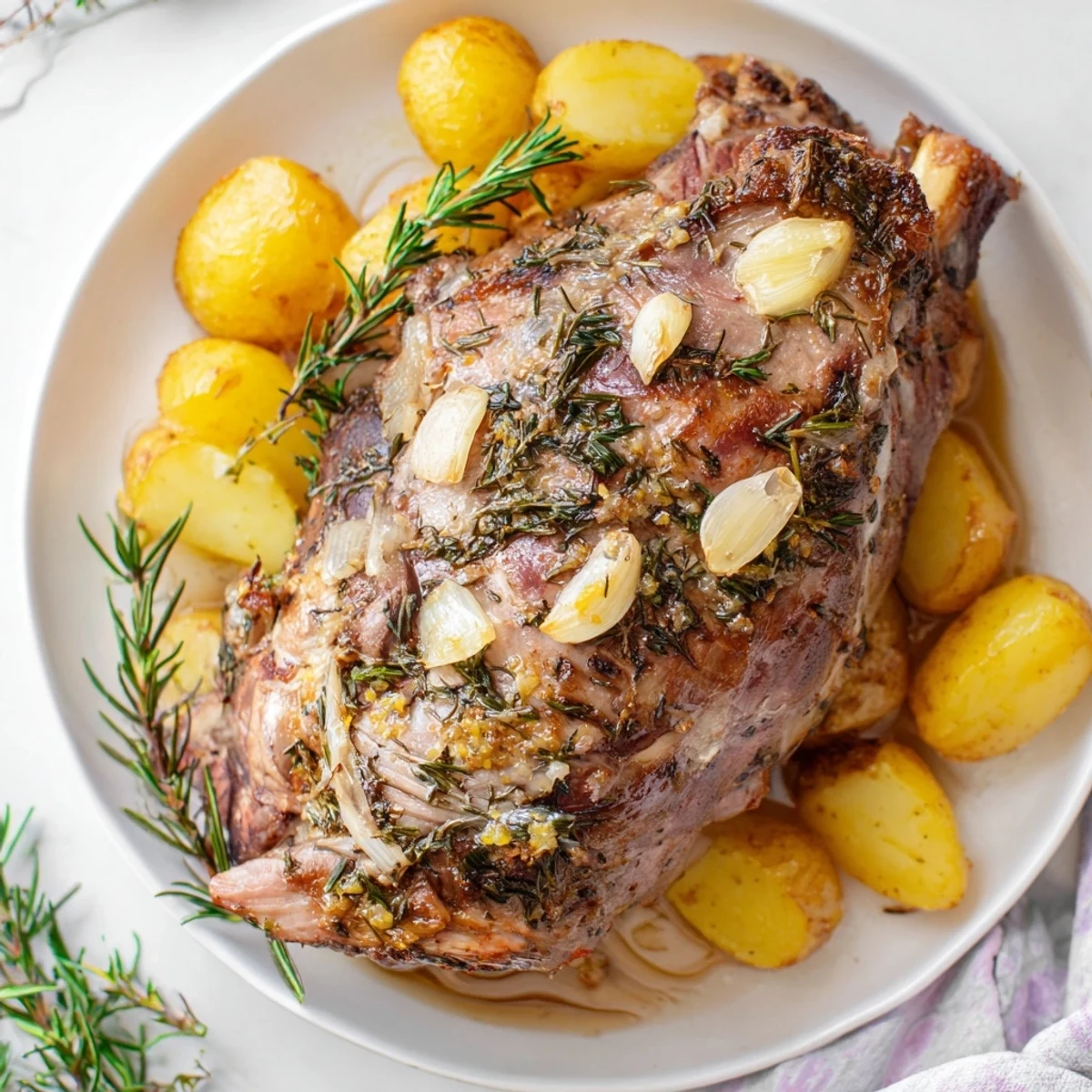
 This dish features a bone-in leg of lamb kissed with fresh rosemary, thyme, garlic, and lemon zest. The meat is carefully scored to infuse flavors deeply, then roasted slowly alongside waxy potatoes and thickly sliced onions. A combination of white wine and stock adds moisture and a delicate aroma to the roasting pan, ensuring tender meat and crispy golden potatoes. Resting the lamb after cooking maintains juiciness, and basting during roasting enhances richness. Ideal for festive meals or a special Sunday dinner, this preparation balances herbaceous notes and savory textures for a memorable main centerpiece.
The first time I attempted a leg of lamb, I was hosting Easter dinner and completely underestimated how dramatic the whole affair would feel. Something about pulling that golden-crusted monster from the oven makes even a casual Tuesday feel like a celebration. My guests actually hovered around the carving board, forks in hand, while I sliced. Now it is my go-to when I want food that says I put proper effort into this.
I learned the hard way that resting meat is not optional. One year I carved too soon and watched all those gorgeous juices pool onto the cutting board instead of staying in the meat where they belonged. My brother still teases me about that slightly dry lamb. Now I treat the resting period as sacred kitchen law, no matter how much everyone is clamoring to eat.
Ingredients
- Leg of lamb bone-in: The bone adds flavor and helps the meat cook evenly, plus it looks impressive coming out of the oven
- Garlic cloves: Tucking these into little incisions means roasted garlic flavor infuses the meat from inside out
- Fresh rosemary and thyme: These woody herbs stand up to high roasting temperatures without turning bitter
- Coarse sea salt: Larger crystals create a gorgeous crust and provide satisfying textural pops
- Lemon zest: Adds a bright aromatic lift that cuts through the rich meat perfectly
- Waxy potatoes: These hold their shape during long roasting unlike floury varieties that might fall apart
- Yellow onions: They collapse into sweetness and form a flavorful bed for the lamb
- Dry white wine and stock: This mixture creates steam and prevents the pan from burning while building pan juices
Instructions
- Prepare the lamb:
- Pat the meat completely dry with paper towels then use a sharp knife to make small slits all over and tuck garlic slices inside
- Make the herb paste:
- Mix rosemary, thyme, salt, pepper, olive oil, and lemon zest until it becomes a fragrant paste then rub it thoroughly over every surface of the lamb
- Arrange the base:
- Scatter thick onion slices across the bottom of your roasting pan and nestle quartered potatoes around the edges
- Position the meat:
- Set the seasoned lamb directly on top of the onion bed so juices can drip down and flavor everything
- Add the liquids:
- Pour in the wine and stock around the edges of the pan being careful not to wash away that herb crust you just applied
- Initial high heat:
- Roast at 200°C (400°F) for 20 minutes to develop a gorgeous golden crust on the outside
- Finish roasting:
- Reduce temperature to 180°C (350°F) and continue for about 1 hour 20 minutes or until it reaches your preferred doneness
- Tend the potatoes:
- Give the potatoes a turn or two during cooking so they brown evenly on all sides
- Rest the meat:
- Let the lamb rest under a loose foil tent for 15 minutes before carving or you will lose all those precious juices
 Pin It
 My aunt always said the best part of roast lamb is fighting over who gets the crispy end pieces at the table. There is something wonderfully primal about gathering around a platter of carved meat. It turns dinner into an event instead of just a meal.
Getting The Crust Right
The herb paste needs to be thick enough to cling to the meat, not run off into the pan. I mix it right in a little bowl until the oil and herbs become a cohesive paste. Press it firmly onto the surface so it does not slide off during roasting.
Timing Matters
Calculate about 20 minutes per 500g (1 lb) but always trust your thermometer over the clock. Factors like starting temperature and oven accuracy can throw off timing by quite a bit. I usually start checking 15 minutes early just to be safe.
Carving Confidence
Let your knife do the work rather than forcing it through the meat. A sharp carving knife with a long blade makes clean slices and looks impressive at the table. Serve each person with a mix of slices from different parts of the leg so everyone gets to experience the variation in doneness.
- Cut against the grain for the most tender eating experience
- Spoon those pan juices over each portion rather than making a separate gravy
- Keep the bone for making stock the next day if you are feeling thrifty
 Pin It
 There is nothing quite like the smell of roasting lamb filling the whole house. It makes even a regular Tuesday dinner feel like a proper feast.
Recipe Q&A
- → How do you prepare the lamb for roasting?
-
Make small incisions in the lamb to insert sliced garlic, then rub the meat thoroughly with a blend of rosemary, thyme, olive oil, lemon zest, salt, and pepper to infuse deep flavor.
- → What is the best way to cook the potatoes alongside the meat?
-
Place peeled, quartered waxy potatoes around the meat in the roasting pan and turn them once or twice during cooking to ensure even browning and a crispy texture.
- → Why add white wine and stock to the roasting pan?
-
Adding white wine and stock creates steam and moisture, helping keep the lamb juicy while imparting subtle aromatic notes to both meat and vegetables.
- → How can I check when the lamb is perfectly cooked?
-
Use a meat thermometer aiming for an internal temperature between 55–60°C (130–140°F) to reach medium-rare, ensuring tender and juicy results.
- → What are some serving suggestions to complement this dish?
-
Serve with steamed green beans or asparagus for a fresh contrast, and consider pairing with a robust red wine like Bordeaux or Syrah to enhance the flavors.