
 Pin It
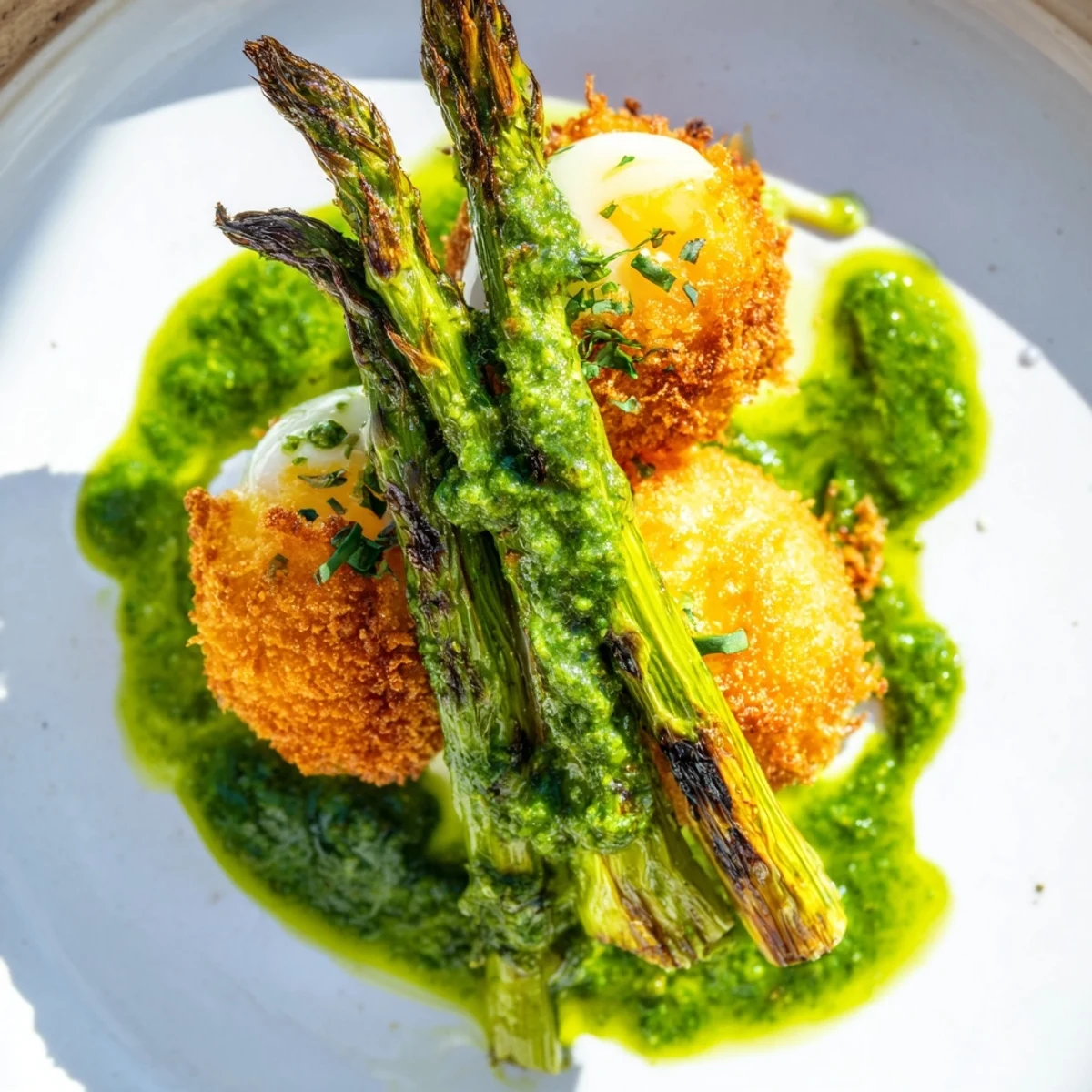
 Elevate your appetizer game with these golden, crispy egg yolks that deliver a luxurious contrast to tender grilled asparagus. The yolks are carefully chilled, coated in seasoned breadcrumbs, then quickly fried until perfectly crisp while remaining creamy inside. A bright, herbaceous sauce made with fresh parsley, chives, and tarragon adds the perfect finishing touch. This elegant dish comes together in just 35 minutes and delivers restaurant-quality presentation with sophisticated flavors. The preparation requires some attention to detail, especially when handling delicate egg yolks, but the stunning results make it worthwhile.
The frying oil crackled and I nearly jumped out of my skin the first time a breaded egg yolk hit the pot, but when I fished out that impossibly golden orb and broke it open over a stalk of asparagus, I understood why restaurants charge eighteen dollars for this.
My friend Lena stood in my kitchen last Easter, wine glass in hand, watching me lower yolks into oil with the focus of a bomb disposal technician, and when she finally tasted one she refused to share the rest of the plate.
Ingredients
- 8 large egg yolks: Separate them carefully while the whites are still cold, then handle gently because a broken yolk at this stage means starting over.
- 500 g green asparagus: Snap off the woody ends where they naturally break and choose stalks that are pencil thick for the most even cooking.
- 1 tbsp olive oil: Just enough to coat the asparagus before grilling.
- Salt and black pepper: Season the asparagus boldly because the egg yolks are mild.
- 1/2 cup fine breadcrumbs: Fine crumbs create a more delicate crust than coarse ones.
- 1 tbsp grated Parmesan cheese: Adds a savory depth to the coating but skip it for a lighter result.
- 1/4 cup fresh parsley: Use flat leaf parsley for the best flavor.
- 2 tbsp fresh chives: Snip them with scissors instead of chopping for cleaner cuts.
- 2 tbsp fresh tarragon: This is the secret ingredient that makes the sauce taste restaurant quality.
- 1 small garlic clove: One is enough because raw garlic can easily overpower the herbs.
- 2 tbsp lemon juice: Fresh squeezed only because the bottled kind tastes flat here.
- 1 tsp Dijon mustard: Acts as an emulsifier to keep the sauce from separating.
- 1/2 cup extra virgin olive oil: Use a good one since it is the body of the sauce.
- Vegetable oil for frying: You need a neutral oil with a high smoke point.
Instructions
- Make the herb sauce:
- Whisk together the parsley, chives, tarragon, garlic, lemon juice, mustard, and olive oil in a bowl until everything is smoothly combined, then season with salt and pepper to taste and set it aside so the flavors marry.
- Freeze the yolks:
- Carefully separate each yolk and place them on a plate, then slide the plate into the freezer for thirty minutes until the yolks feel firm to the touch but are not frozen solid through the center.
- Prep the coating:
- Stir the breadcrumbs and Parmesan together in a shallow bowl, then gently roll each chilled yolk in the mixture with your fingertips, pressing lightly to coat every surface without applying enough pressure to burst them.
- Fry the yolks:
- Heat vegetable oil in a small heavy pot to 170 degrees Celsius, then carefully lower each coated yolk in with a slotted spoon and fry for thirty to sixty seconds until the crust is a deep even gold, then drain on paper towels immediately.
- Cook the asparagus:
- Toss the trimmed asparagus with olive oil, salt, and pepper, then grill or sauté over medium high heat for five to seven minutes until the stalks are tender with charred spots that add a smoky sweetness.
- Assemble and serve:
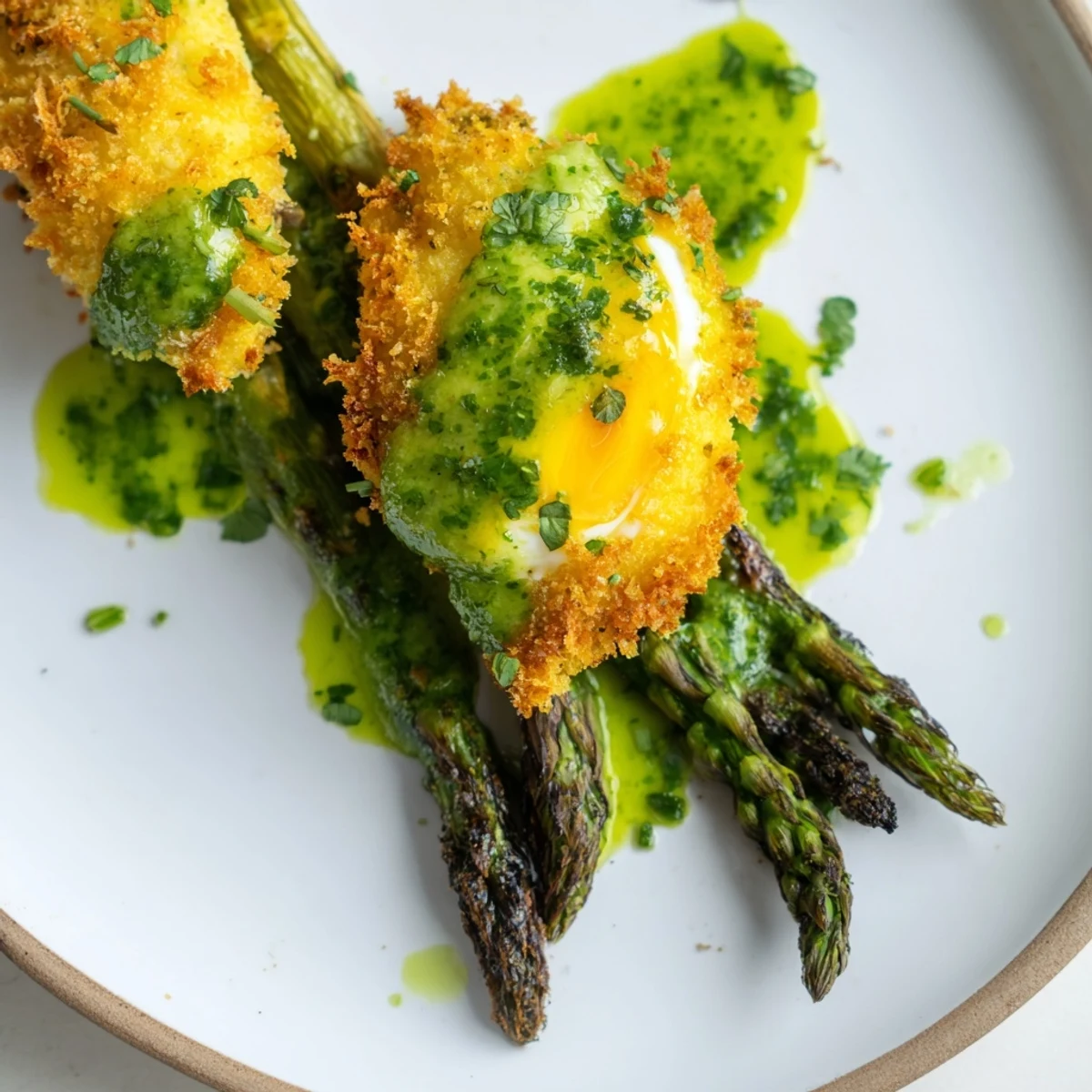
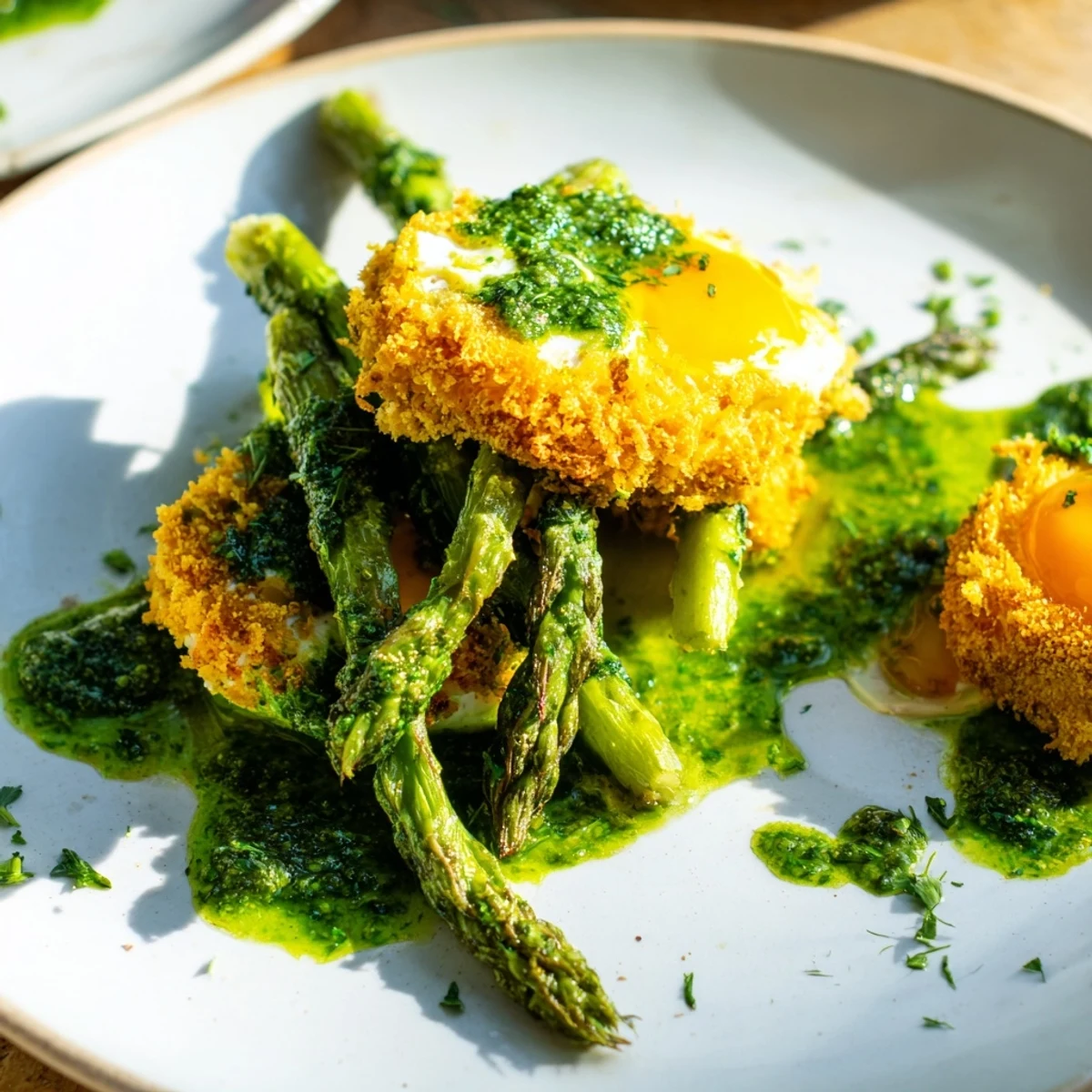
- Arrange the asparagus on warmed plates, nestle the crispy yolks on top, and drizzle the herb sauce generously over everything just before bringing them to the table while the yolks are still hot.
 Pin It
 There is something quietly theatrical about watching someone cut into a crispy egg yolk and watching the golden center pool across the plate, and it never fails to earn a gasp from anyone sitting at the table.
Picking the Right Asparagus
Look for stalks with tightly closed tips and stems that snap cleanly, because thick woody asparagus will fight you on the grill and end up stringy on the plate.
A Lighter Approach
If deep frying feels like too much commitment on a Tuesday, bake the breaded yolks at 220 degrees Celsius for four to five minutes and you will still get a respectable crust with less splatter.
Getting the Fry Right
Use a small pot rather than a large one because you need less oil to reach the proper depth, and fry no more than two yolks at a time so the temperature does not drop.
- Test the oil with a single breadcrumb before adding a yolk because it should sizzle immediately but not turn dark within seconds.
- Have your paper towels ready before the first yolk goes in because timing is everything at this stage.
- Remember that the yolks continue cooking slightly after you remove them so pull them a touch early.
 Pin It
 Keep the herb sauce in a small jug on the table because people will want to pour more over everything once they taste it.
Recipe Q&A
- → How do I prevent egg yolks from breaking during preparation?
-
Separate yolks carefully, keeping them intact. Freeze for 30 minutes until firm but not completely solid—this creates stability while maintaining the creamy texture inside. Handle gently during coating.
- → Can I make this dish ahead of time?
-
Prepare the herb sauce up to 4 hours in advance and refrigerate. Coat and fry yolks just before serving for optimal crispiness. Asparagus can be grilled earlier and served at room temperature.
- → What oil temperature works best for frying?
-
Maintain oil at 170°C (340°F). Too hot and the coating burns before yolk heats through; too cool and they become greasy. Use a kitchen thermometer for consistent results.
- → Can I bake instead of deep-fry the yolks?
-
Yes. Bake coated yolks at 220°C (425°F) for 4–5 minutes until golden. Results are slightly less crispy but still delicious and significantly lighter.
- → What vegetables work well as substitutes for asparagus?
-
Green beans, broccolini, or roasted rapini make excellent alternatives. Choose vegetables that hold their shape well and provide a slight crunch to complement the crispy yolks.
- → How do I know when yolks are perfectly fried?
-
The coating should be golden brown and the yolks should feel slightly yielding when touched, not hard. They continue cooking slightly from residual heat after draining.